Histry
 Colosseum – The Grand Symbol of Ancient Rome 🏛️✨
In the heart of Rome, Italy, stands one of the most legendary structures ever created by humans — the Colosseum. This magnificent monument is not only a masterpiece of ancient architecture but also a powerful symbol of the glory, strength, and culture of the Roman Empire. Even after nearly two thousand years, the Colosseum continues to amaze millions of people from around the world with its beauty, history, and incredible design.
The Colosseum is located in the beautiful city of Rome, in the country of Italy. It was built during the time of the Roman Empire under Emperor Vespasian around 70 AD, and later completed by his son Titus in 80 AD. At that time, Rome was one of the most powerful civilizations in the world, and the Colosseum was created to entertain the people and demonstrate the greatness of the empire.
This giant amphitheater could hold nearly 50,000 to 80,000 spectators at one time. People from different parts of the empire gathered there to watch
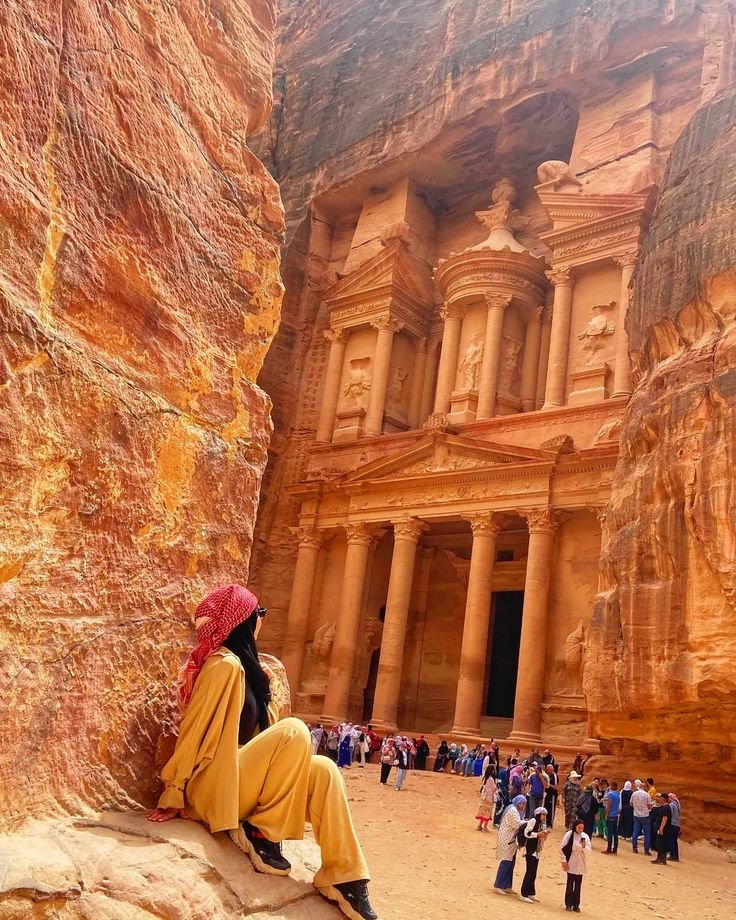
Petra – A Timeless Masterpiece Hidden in the Heart of Jordan 🌹🏛️
Among the golden deserts and towering mountains of Jordan lies Petra, a city so breathtaking that it feels like a dream carved into stone. Known around the world as the “Rose City,” Petra glows with soft shades of pink, red, and gold, creating a magical view that leaves every visitor speechless.More than two thousand years ago, the talented Nabataean civilization transformed massive mountains into extraordinary works of art. With remarkable skill and imagination, they carved grand temples, royal tombs, and majestic pathways directly into the cliffs. Even today, modern architecture struggles to match the beauty and perfection of Petra.The journey into Petra begins through a narrow canyon called the Siq. As sunlight gently touches the stone walls, visitors walk through a peaceful path surrounded by towering rocks. Then suddenly, like a hidden treasure from another world, the magnificent Al-Khazneh appears. Its giant pillars, elegant carvings, and royal beauty create a moment that feels almost unreal.Every corner of Petra tells a story from the ancient world. Silent caves whisper forgotten history, while the ancient pathways carry the footsteps of travelers from centuries ago. The city is filled with mystery, wonder, and timeless beauty that captures the hearts of millions.What makes Petra even more extraordinary is the intelligence of its people. In the middle of the harsh desert, the Nabataeans created advanced water systems, canals, and reservoirs that allowed their civilization to flourish. Their creativity and engineering brilliance were truly far ahead of their time.At sunrise, Petra shines like glowing gold beneath the morning sky. At sunset, the mountains turn deep shades of red and orange, painting a scene so beautiful that words can hardly describe it. Under the quiet night sky, Petra feels peaceful, magical, and eternal.Today, Petra proudly stands as one of the New Seven Wonders of the World, attracting travelers, photographers, and history lovers from every corner of the globe. Yet Petra is more than a historical site — it is a symbol of beauty, imagination, strength, and human achievement.Petra is not simply a city of stone; it is a timeless masterpiece where history, mystery, and beauty live together forever. ✨
Hanging Gardens of Babylon: The Lost Wonder That May Never Have Existed
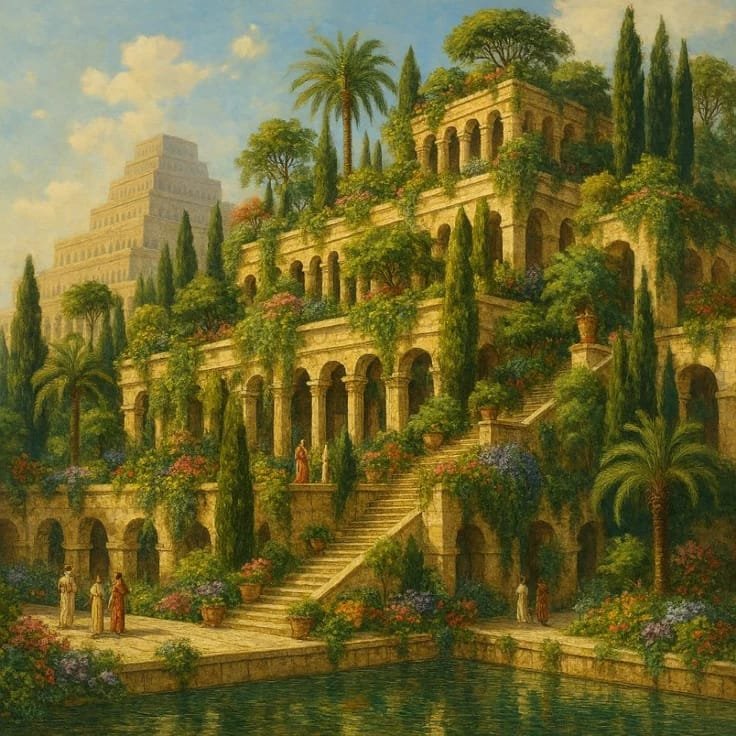
Out of the 7 Wonders of the Ancient World, 6 are proven. But the Hanging Gardens - are the biggest mystery. Were they real? A myth? Or the greatest PR stunt in history? Let’s dive in.1. What Were the Hanging Gardens?According to ancient Greek writers like Strabo and Diodorus, the Hanging Gardens were built around 600 BC by King Nebuchadnezzar II for his wife Queen Amytis. She missed the green mountains of her homeland, Media. So the king built her a mountain of flowers.Description: A massive ziggurat-like structure with terraces. Each level had soil, trees, vines, and flowers. Water was pumped up from the Euphrates River using a chain pump system - like an ancient elevator for water. From far away, it looked like a green mountain “hanging” in the air. Hence the name.2. The Problem: No Proof ExistsHere’s the twist: Babylonian records never mention it. Archaeologists have dug Babylon for 100 years. They found the Isht
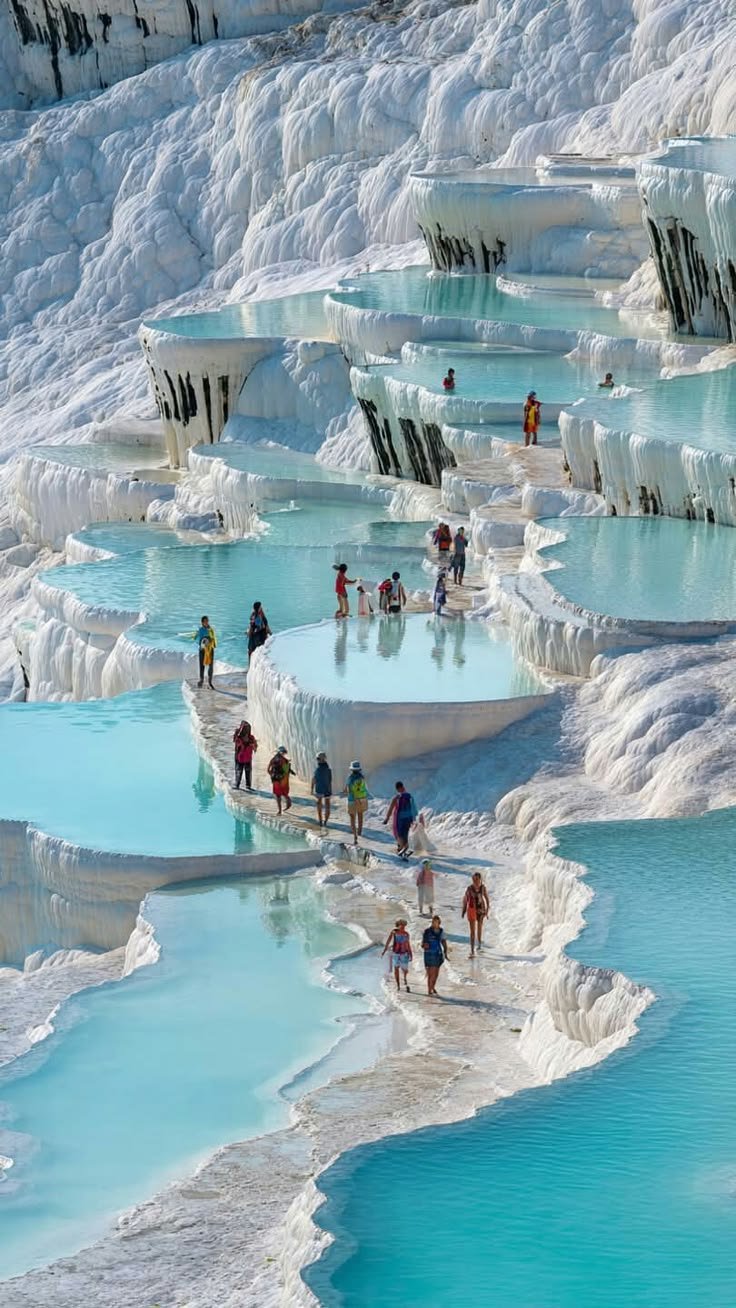
The Cotton Castle: Why Turkey’s Pamukkale is a Natural Wonder You Must Visit
The Cotton Castle: Why Turkey’s Pamukkale is a Natural Wonder You Must VisitThere are places on Earth so surreal that they look like they belong in a fantasy movie. One such breathtaking destination is Pamukkale, located in southwestern Turkey. Known locally as the "Cotton Castle," this stunning natural wonder is a mesmerizing blend of gleaming white terraces and brilliant turquoise thermal waters.If you are looking for a destination that combines mind-boggling geology with ancient royal history, Pamukkale deserves the top spot on your travel bucket list.How Was the "Cotton Castle" Formed?At first glance, the snowy white slopes shown in images like 144211.jpg look like massive glaciers or fields of fluffy cotton. However, there is no ice here. The landscape is entirely made of travertine—a unique type of limestone.For thousands of years, highly concentrated calcium-rich thermal springs have flowed down the mountainside. As the warm water hits the open air, the calcium carbonate precipitates and solidifies, slowly creating cascading white terraces, frozen waterfalls, and natural infinity pools over centuries. The result is a striking contrast of stark white cliffs cradling warm, sky-blue waters.The Healing Waters of HierapolisPamukkale’s appeal goes far beyond its visual beauty. Since ancient times, people have flocked here for the waters' therapeutic properties. The thermal springs remain at a comfortable, spa-like temperature of around 36°C (97°F) and are rich in minerals said to cure skin diseases, high blood pressure, and rheumatism.Attracted by these healing springs, the Romans built a grand spa city right at the top of the white terraces called Hierapolis. Today, tourists can explore the remarkably preserved ruins of this ancient UNESCO World Heritage site, including a massive Roman amphitheater, ancient temples, and monumental city gates.Swim with History in Cleopatra’s PoolThe crown jewel of Hierapolis is the Antique Pool, famously nicknamed Cleopatra’s Pool. Legend has it that the beautiful Egyptian Queen Cleopatra herself swam in these waters to maintain her youth and radiance.What makes this pool unforgettable is that it is a literal sunken garden of antiquity. An earthquake centuries ago caused massive Roman columns and marble pillars to collapse into the spring. Today, you can literally swim and float directly over genuine 2,000-year-old Roman ruins submerged in crystal-clear, warm mineral water.A Paradise for Photographers and TravelersWalking on the terraces of Pamukkale is a sensory experience like no other. To protect the delicate travertine formations, visitors are required to take off their shoes and walk barefoot along designated pathways. The feeling of soft, wet limestone under your feet while wading through warm, electric-blue pools is pure magic.🌅 The Golden Hour MagicWhile Pamukkale is stunning during the day, the sunset is when the real magic happens. As the sun dips below the horizon, the white limestone acts like a giant mirror, reflecting brilliant shades of pink, orange, and gold. The entire mountain looks like it has been dusted with diamonds.Final ThoughtsPamukkale is a rare masterpiece where the brilliance of nature perfectly intertwines with human history. It stands as a testament to the wonders of our planet. Whether you are a history buff, a nature lover, or an avid photographer, visiting Turkey’s Cotton Castle is an unforgettable experience that will stay with you forever.
Colosseum – The Grand Symbol of Ancient Rome 🏛️✨
In the heart of Rome, Italy, stands one of the most legendary structures ever created by humans — the Colosseum. This magnificent monument is not only a masterpiece of ancient architecture but also a powerful symbol of the glory, strength, and culture of the Roman Empire. Even after nearly two thousand years, the Colosseum continues to amaze millions of people from around the world with its beauty, history, and incredible design.
The Colosseum is located in the beautiful city of Rome, in the country of Italy. It was built during the time of the Roman Empire under Emperor Vespasian around 70 AD, and later completed by his son Titus in 80 AD. At that time, Rome was one of the most powerful civilizations in the world, and the Colosseum was created to entertain the people and demonstrate the greatness of the empire.
This giant amphitheater could hold nearly 50,000 to 80,000 spectators at one time. People from different parts of the empire gathered there to watch
Petra – A Timeless Masterpiece Hidden in the Heart of Jordan 🌹🏛️
Among the golden deserts and towering mountains of Jordan lies Petra, a city so breathtaking that it feels like a dream carved into stone. Known around the world as the “Rose City,” Petra glows with soft shades of pink, red, and gold, creating a magical view that leaves every visitor speechless.More than two thousand years ago, the talented Nabataean civilization transformed massive mountains into extraordinary works of art. With remarkable skill and imagination, they carved grand temples, royal tombs, and majestic pathways directly into the cliffs. Even today, modern architecture struggles to match the beauty and perfection of Petra.The journey into Petra begins through a narrow canyon called the Siq. As sunlight gently touches the stone walls, visitors walk through a peaceful path surrounded by towering rocks. Then suddenly, like a hidden treasure from another world, the magnificent Al-Khazneh appears. Its giant pillars, elegant carvings, and royal beauty create a moment that feels almost unreal.Every corner of Petra tells a story from the ancient world. Silent caves whisper forgotten history, while the ancient pathways carry the footsteps of travelers from centuries ago. The city is filled with mystery, wonder, and timeless beauty that captures the hearts of millions.What makes Petra even more extraordinary is the intelligence of its people. In the middle of the harsh desert, the Nabataeans created advanced water systems, canals, and reservoirs that allowed their civilization to flourish. Their creativity and engineering brilliance were truly far ahead of their time.At sunrise, Petra shines like glowing gold beneath the morning sky. At sunset, the mountains turn deep shades of red and orange, painting a scene so beautiful that words can hardly describe it. Under the quiet night sky, Petra feels peaceful, magical, and eternal.Today, Petra proudly stands as one of the New Seven Wonders of the World, attracting travelers, photographers, and history lovers from every corner of the globe. Yet Petra is more than a historical site — it is a symbol of beauty, imagination, strength, and human achievement.Petra is not simply a city of stone; it is a timeless masterpiece where history, mystery, and beauty live together forever. ✨
Hanging Gardens of Babylon: The Lost Wonder That May Never Have Existed
Out of the 7 Wonders of the Ancient World, 6 are proven. But the Hanging Gardens - are the biggest mystery. Were they real? A myth? Or the greatest PR stunt in history? Let’s dive in.1. What Were the Hanging Gardens?According to ancient Greek writers like Strabo and Diodorus, the Hanging Gardens were built around 600 BC by King Nebuchadnezzar II for his wife Queen Amytis. She missed the green mountains of her homeland, Media. So the king built her a mountain of flowers.Description: A massive ziggurat-like structure with terraces. Each level had soil, trees, vines, and flowers. Water was pumped up from the Euphrates River using a chain pump system - like an ancient elevator for water. From far away, it looked like a green mountain “hanging” in the air. Hence the name.2. The Problem: No Proof ExistsHere’s the twist: Babylonian records never mention it. Archaeologists have dug Babylon for 100 years. They found the Isht
The Cotton Castle: Why Turkey’s Pamukkale is a Natural Wonder You Must Visit
The Cotton Castle: Why Turkey’s Pamukkale is a Natural Wonder You Must VisitThere are places on Earth so surreal that they look like they belong in a fantasy movie. One such breathtaking destination is Pamukkale, located in southwestern Turkey. Known locally as the "Cotton Castle," this stunning natural wonder is a mesmerizing blend of gleaming white terraces and brilliant turquoise thermal waters.If you are looking for a destination that combines mind-boggling geology with ancient royal history, Pamukkale deserves the top spot on your travel bucket list.How Was the "Cotton Castle" Formed?At first glance, the snowy white slopes shown in images like 144211.jpg look like massive glaciers or fields of fluffy cotton. However, there is no ice here. The landscape is entirely made of travertine—a unique type of limestone.For thousands of years, highly concentrated calcium-rich thermal springs have flowed down the mountainside. As the warm water hits the open air, the calcium carbonate precipitates and solidifies, slowly creating cascading white terraces, frozen waterfalls, and natural infinity pools over centuries. The result is a striking contrast of stark white cliffs cradling warm, sky-blue waters.The Healing Waters of HierapolisPamukkale’s appeal goes far beyond its visual beauty. Since ancient times, people have flocked here for the waters' therapeutic properties. The thermal springs remain at a comfortable, spa-like temperature of around 36°C (97°F) and are rich in minerals said to cure skin diseases, high blood pressure, and rheumatism.Attracted by these healing springs, the Romans built a grand spa city right at the top of the white terraces called Hierapolis. Today, tourists can explore the remarkably preserved ruins of this ancient UNESCO World Heritage site, including a massive Roman amphitheater, ancient temples, and monumental city gates.Swim with History in Cleopatra’s PoolThe crown jewel of Hierapolis is the Antique Pool, famously nicknamed Cleopatra’s Pool. Legend has it that the beautiful Egyptian Queen Cleopatra herself swam in these waters to maintain her youth and radiance.What makes this pool unforgettable is that it is a literal sunken garden of antiquity. An earthquake centuries ago caused massive Roman columns and marble pillars to collapse into the spring. Today, you can literally swim and float directly over genuine 2,000-year-old Roman ruins submerged in crystal-clear, warm mineral water.A Paradise for Photographers and TravelersWalking on the terraces of Pamukkale is a sensory experience like no other. To protect the delicate travertine formations, visitors are required to take off their shoes and walk barefoot along designated pathways. The feeling of soft, wet limestone under your feet while wading through warm, electric-blue pools is pure magic.🌅 The Golden Hour MagicWhile Pamukkale is stunning during the day, the sunset is when the real magic happens. As the sun dips below the horizon, the white limestone acts like a giant mirror, reflecting brilliant shades of pink, orange, and gold. The entire mountain looks like it has been dusted with diamonds.Final ThoughtsPamukkale is a rare masterpiece where the brilliance of nature perfectly intertwines with human history. It stands as a testament to the wonders of our planet. Whether you are a history buff, a nature lover, or an avid photographer, visiting Turkey’s Cotton Castle is an unforgettable experience that will stay with you forever.