Blog
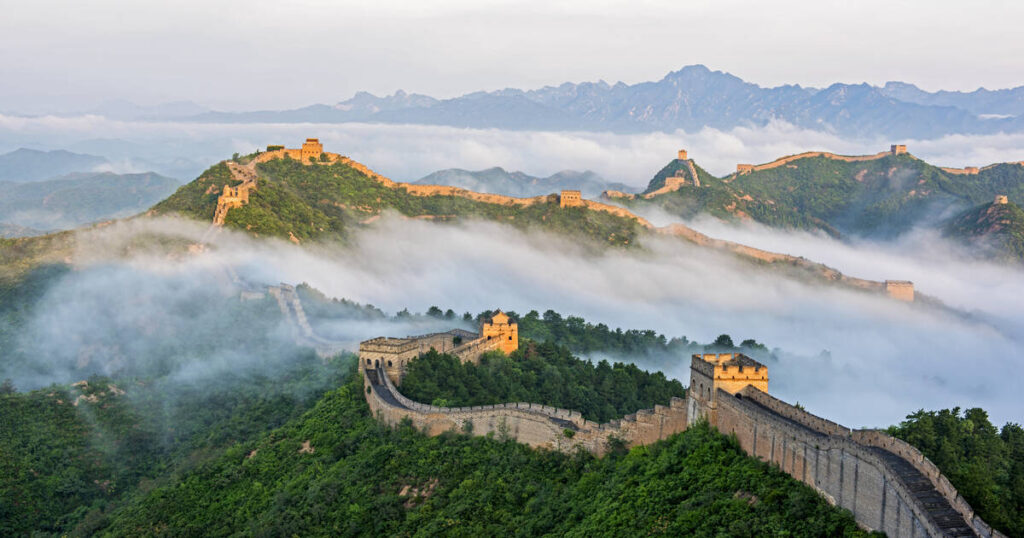
The Great Wall of China
The Great Wall of China is one of the most remarkable architectural feats in human history. It wasn’t built all at once; rather, it is a massive network of walls, trenches, and watchtowers constructed over two millennia.
Here is a breakdown of its history:
1. Early Beginnings (7th – 3rd Century BC)
Before China became a unified empire, the region was divided into different warring states.
- The Purpose: Individual states (like Qi, Yan, and Zhao) built independent walls to protect their borders from each other and from nomadic tribes from the north (like the Xiongnu).
- Materials: These early walls were mostly made of rammed earth, gravel, and wood.
2. The First Unified Wall: Qin Dynasty (221 – 206 BC)
Qin Shi Huang, the first Emperor of China (famous for uniting the country), decided that the individual walls between states were no longer needed.
- He ordered the destruction of internal walls and connected the northern walls into a single defensive line.
- This became the official beginning of the “Great Wall.”
- It was a brutal project; hundreds of thousands of soldiers, peasants, and convicts were forced into hard labor, and many died during construction.
3. Expansion and Maintenance: Han Dynasty (206 BC – 220 AD)
The Han Dynasty extended the wall further west into the Gobi Desert.
- The Purpose: Aside from military defense, the wall during this era was heavily used to protect the Silk Road trading routes, ensuring safe passage for merchants and goods.
4. The Golden Era: Ming Dynasty (1368 – 1644)
Almost all of the famous, stone-faced wall images you see today were built during the Ming Dynasty.
- After the Mongols (who had previously conquered China and formed the Yuan Dynasty) were driven out, the Ming emperors wanted to make sure they could never return.
- The Upgrade: They stopped using just rammed earth and upgraded the wall using solid bricks and cut stone blocks.
- They built thousands of watchtowers, fortresses, and beacon towers to pass smoke and fire signals quickly across the empire.
Key Historical Facts
| Detail | Fact |
| Total Length | Approximately 21,196 kilometers (13,171 miles) when including all its historical branches. |
| The Myth | Contrary to popular belief, it cannot be seen from space or the moon with the naked eye without a telescope or camera lens. |
| The Name | In Chinese, it is called Wanli Changcheng, which translates to “The Ten-Thousand-Li Long Wall” (a ‘Li’ is an ancient Chinese unit of distance).The Great Wall of China is one of the most remarkable architectural feats in human history. It wasn’t built all at once; rather, it is a massive network of walls, trenches, and watchtowers constructed over two millennia. Here is a breakdown of its history: 1. Early Beginnings (7th – 3rd Century BC) Before China became a unified empire, the region was divided into different warring states. The Purpose: Individual states (like Qi, Yan, and Zhao) built independent walls to protect their borders from each other and from nomadic tribes from the north (like the Xiongnu). Materials: These early walls were mostly made of rammed earth, gravel, and wood. 2. The First Unified Wall: Qin Dynasty (221 – 206 BC) Qin Shi Huang, the first Emperor of China (famous for uniting the country), decided that the individual walls between states were no longer needed. He ordered the destruction of internal walls and connected the northern walls into a single defensive line. This became the official beginning of the “Great Wall.” It was a brutal project; hundreds of thousands of soldiers, peasants, and convicts were forced into hard labor, and many died during construction. 3. Expansion and Maintenance: Han Dynasty (206 BC – 220 AD) The Han Dynasty extended the wall further west into the Gobi Desert. The Purpose: Aside from military defense, the wall during this era was heavily used to protect the Silk Road trading routes, ensuring safe passage for merchants and goods. 4. The Golden Era: Ming Dynasty (1368 – 1644) Almost all of the famous, stone-faced wall images you see today were built during the Ming Dynasty. After the Mongols (who had previously conquered China and formed the Yuan Dynasty) were driven out, the Ming emperors wanted to make sure they could never return. The Upgrade: They stopped using just rammed earth and upgraded the wall using solid bricks and cut stone blocks. They built thousands of watchtowers, fortresses, and beacon towers to pass smoke and fire signals quickly across the empire. Key Historical Facts Detail Fact Total Length Approximately 21,196 kilometers (13,171 miles) when including all its historical branches. The Myth Contrary to popular belief, it cannot be seen from space or the moon with the naked eye without a telescope or camera lens. The Name In Chinese, it is called Wanli Changcheng, which translates to “The Ten-Thousand-Li Long Wall” (a ‘Li’ is an ancient Chinese unit of distance). |